100% Translated
1% Upvoted
2 Translations, 1 Upvotes, Last Activity 2 months, 2 weeks ago
1 Translations, 0 Upvotes, Last Activity 2 months, 3 weeks ago
1 Translations, 0 Upvotes, Last Activity 2 months, 3 weeks ago
1 Translations, 0 Upvotes, Last Activity 2 months, 3 weeks ago
1 Translations, 0 Upvotes, Last Activity 2 months, 3 weeks ago
1 Translations, 0 Upvotes, Last Activity 2 months, 3 weeks ago
1 Translations, 0 Upvotes, Last Activity 2 months, 3 weeks ago
1 Translations, 0 Upvotes, Last Activity 2 months, 3 weeks ago
1 Translations, 0 Upvotes, Last Activity 2 months, 3 weeks ago
1 Translations, 0 Upvotes, Last Activity 2 months, 3 weeks ago
1 Translations, 0 Upvotes, Last Activity 2 months, 3 weeks ago
1 Translations, 0 Upvotes, Last Activity 2 months, 3 weeks ago
1 Translations, 0 Upvotes, Last Activity 2 months, 3 weeks ago
1 Translations, 0 Upvotes, Last Activity 2 months, 3 weeks ago
1 Translations, 0 Upvotes, Last Activity 2 months, 3 weeks ago
1 Translations, 0 Upvotes, Last Activity 2 months, 3 weeks ago
1 Translations, 0 Upvotes, Last Activity 2 months, 3 weeks ago
1 Translations, 0 Upvotes, Last Activity 2 months, 3 weeks ago
1 Translations, 0 Upvotes, Last Activity 2 months, 3 weeks ago
1 Translations, 0 Upvotes, Last Activity 2 months, 3 weeks ago
1 Translations, 0 Upvotes, Last Activity 2 months, 3 weeks ago
1 Translations, 0 Upvotes, Last Activity 2 months, 3 weeks ago
1 Translations, 0 Upvotes, Last Activity 2 months, 3 weeks ago
1 Translations, 0 Upvotes, Last Activity 2 months, 3 weeks ago
1 Translations, 0 Upvotes, Last Activity 2 months, 2 weeks ago
1 Translations, 0 Upvotes, Last Activity 2 months, 2 weeks ago
1 Translations, 0 Upvotes, Last Activity 2 months, 2 weeks ago
1 Translations, 0 Upvotes, Last Activity 2 months, 2 weeks ago
1 Translations, 0 Upvotes, Last Activity 2 months, 2 weeks ago
1 Translations, 0 Upvotes, Last Activity 2 months, 2 weeks ago
1 Translations, 0 Upvotes, Last Activity 2 months, 2 weeks ago
1 Translations, 0 Upvotes, Last Activity 2 months, 2 weeks ago
1 Translations, 0 Upvotes, Last Activity 2 months, 2 weeks ago
1 Translations, 0 Upvotes, Last Activity 2 months, 2 weeks ago
1 Translations, 0 Upvotes, Last Activity 2 months, 2 weeks ago
1 Translations, 0 Upvotes, Last Activity 2 months, 2 weeks ago
1 Translations, 0 Upvotes, Last Activity 2 months, 2 weeks ago
1 Translations, 0 Upvotes, Last Activity 2 months, 2 weeks ago
1 Translations, 0 Upvotes, Last Activity 2 months, 2 weeks ago
1 Translations, 0 Upvotes, Last Activity 2 months, 2 weeks ago
1 Translations, 0 Upvotes, Last Activity 2 months, 2 weeks ago
1 Translations, 0 Upvotes, Last Activity 2 months, 2 weeks ago
1 Translations, 0 Upvotes, Last Activity 2 months, 2 weeks ago
1 Translations, 0 Upvotes, Last Activity 2 months, 2 weeks ago
1 Translations, 0 Upvotes, Last Activity 2 months, 2 weeks ago
1 Translations, 0 Upvotes, Last Activity 2 months, 2 weeks ago
1 Translations, 0 Upvotes, Last Activity 2 months, 2 weeks ago
1 Translations, 0 Upvotes, Last Activity 2 months, 2 weeks ago
1 Translations, 0 Upvotes, Last Activity 2 months, 2 weeks ago
1 Translations, 0 Upvotes, Last Activity 2 months, 2 weeks ago
1 Translations, 0 Upvotes, Last Activity 2 months, 2 weeks ago
1 Translations, 0 Upvotes, Last Activity 2 months, 2 weeks ago
1 Translations, 0 Upvotes, Last Activity 2 months, 2 weeks ago
1 Translations, 0 Upvotes, Last Activity 2 months, 2 weeks ago
1 Translations, 0 Upvotes, Last Activity 2 months, 2 weeks ago
1 Translations, 0 Upvotes, Last Activity 2 months, 2 weeks ago
1 Translations, 0 Upvotes, Last Activity 2 months, 2 weeks ago
1 Translations, 0 Upvotes, Last Activity 2 months, 2 weeks ago
1 Translations, 0 Upvotes, Last Activity 2 months, 2 weeks ago
1 Translations, 0 Upvotes, Last Activity 2 months, 2 weeks ago
1 Translations, 0 Upvotes, Last Activity 2 months, 1 week ago
1 Translations, 0 Upvotes, Last Activity 2 months, 1 week ago
1 Translations, 0 Upvotes, Last Activity 2 months, 1 week ago
1 Translations, 0 Upvotes, Last Activity 2 months, 1 week ago
1 Translations, 0 Upvotes, Last Activity 2 months, 1 week ago
1 Translations, 0 Upvotes, Last Activity 2 months, 1 week ago
1 Translations, 0 Upvotes, Last Activity 2 months, 1 week ago
1 Translations, 0 Upvotes, Last Activity 2 months, 1 week ago
1 Translations, 0 Upvotes, Last Activity 2 months, 1 week ago
1 Translations, 0 Upvotes, Last Activity 2 months, 1 week ago
1 Translations, 0 Upvotes, Last Activity 2 months, 1 week ago
1 Translations, 0 Upvotes, Last Activity 2 months, 1 week ago
1 Translations, 0 Upvotes, Last Activity 2 months, 1 week ago
Niet de sommelier, maar de sappelier maakt de dranken voor de alcoholvrije ‘pairing’ in het restaurant: ‘Het is ook voor de show’
Alcoholvrij: Steeds meer restaurants zien het als hun opdracht om de dranken voor het non-alcoholische arrangement zelf te vervaardigen en niet uit een fles te schenken. „Ik zet liever iets moois van mezelf op tafel dat beter aansluit bij het gerecht.”
Door Ron Rijghard, www.ntc.nl, 24 juni 2026.
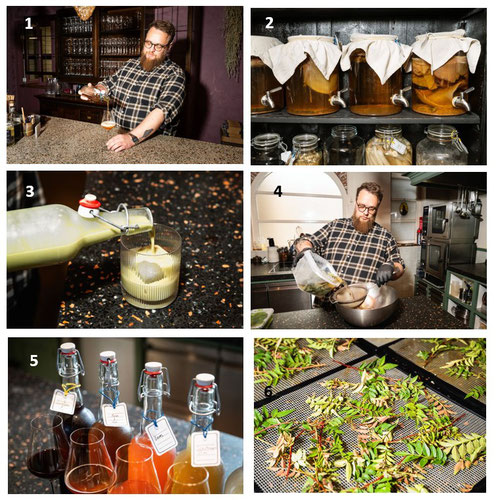
Sommelier Bart van Gemert maakt ook alcoholvrije drankjes bij restaurant Neder.
FOTO 1 - SIMON LENSKENS.
Een kunstige, glazen karaf die thee en witte wolken in een wijnglas giet, een cocktailglas met een groen bepoederde, witte roomlaag drijvend op oranjekleurige drank, een wijnglas met groene takjes met roze bloemen over een roze vloeistof: de creaties van Wendy Tsang leveren prachtige plaatjes op. Het zijn de dranken die ze bij haar restaurant O&O in het Brabantse Sint Willebrord maakt voor het non-alcohol arrangement.
Het is een aanzwellende trend: steeds meer restaurants leggen er eer in om alcoholvrije dranken zelf te vervaardigen. „Onze alcoholvrije pairing moet dezelfde beleving bieden als het eten”, zegt Tsang. „Daarom kiezen we niet voor bestaande alcoholvrije dranken. Die missen vaak diepgang.”
Het zelf maken gebeurt met evenveel aandacht en zorg, en op hetzelfde niveau als waarmee het eten wordt bereid, ziet Joël Broekaert, culinair journalist van NRC. „De drankjes worden kwalitatief steeds beter. Je ziet het steeds meer restaurants doen en over de hele linie stijgt het niveau. Dranken worden vernuftiger en eleganter.”
Restaurants willen er vooral hun vakmanschap en creativiteit mee uitdragen. Boroekaert: „In het minder creatieve segment kun je wel uit de voeten met flessen, maar dat is niet gastronomisch en je drukt er geen eigenheid mee uit.”
Kombucha-explosie.
Alcoholvrij drinken is op zichzelf al een gewoonte die steeds meer ingeburgerd raakt, zeker onder de jongere generaties. Alcoholvrij bier is gemeengoed, net als mocktails en speciale limonades, in flessen en blikjes. De romantische gloed van alcohol drinken bladdert af. Algemeen wordt erkend dat het slecht voor je is. Het officiële advies van het Voedingscentrum is: „Drink geen alcohol. En als je toch drinkt, dan niet meer dan 1 glas per dag.” Dat grappen van een cabaretier als Youp van ’t Hek over drinkers van alcoholvrij bier („van die lullen van veertig” met „gereformeerd bier”) breed aansloegen, voelt inmiddels als iets uit de prehistorie (het was zijn oudejaarsconference uit 1989).
De kwaliteitsimpuls van deze drankjes begon bij pioniers als het Deense toprestaurant Noma, waar je in het visseizoen een kastanjedrank geserveerd kan krijgen bij je koningskrab. Die inzet vond zijn weg naar andere sterrenrestaurants. En van de top van de piramide sijpelde het gebruik door naar een brede laag van horecazaken die zichzelf willen onderscheiden. Een grote impuls was de kombucha-explosie van een paar jaar geleden, Iedereen en je moeder ging opeens aan deze gefermenteerde thee, en het is nog steeds populair, ook in de alcoholvrije pairing.
Alcoholvrije drankjes bij restaurant Neder. FOTO 2 - SIMON LENSKENS.
Broekaert kan de populariteit van het non-alcohol arrangement wel verklaren: „Wijn is prettig om drie redenen: de alcohol die lekker is en mensen doet ontspannen, het enorm diverse smakenpalet en het feit dat het een zure drank is die verfrist en door vettigheid heen snijdt. Die laatste twee kwaliteiten kan non-alcohol ook bieden. Dan moet het niet te zoet of te zwaar zijn. Geen zeven gangen wortelsap. Dan zit je vol. Een mix van sap, thee en kombucha werkt wel.”
Uit moeders tuin.
Bart van Gemert, sommelier bij restaurant Neder in Alkmaar, onderschrijft de voordelen van zelf dranken maken. „In vergelijking met wijnen is de keuze in kant-en-klare alcoholvrije dranken niet zo groot. Ik zet dan liever iets moois van mezelf op tafel dat beter aansluit bij het gerecht.” Hij ontwikkelt de dranken specifiek bij het menu. „Ik let daarbij op of aroma’s elkaar aanvullen of versterken, op de zuurgraad en op het mondgevoel.”
Van Gemert geeft een voorbeeld. „Ik heb een zwart gerijpte pruimensiroop gemaakt, met pruimen uit mijn moeders tuin. Die hebben zes weken op zestig graden gegaard tot ze zwart waren. De siroop is aangelengd met een thee van hooi, venkelloof en zeewier. Dat zuur ik nog wat aan. Deze drank past bij onze interpretatie van babi pangang, een stuk geroosterd buikspek met een laksaus van pruimen en een atjar van bloemkool.”
Aldus ontstaan twee bewerkingen van pruim: één bij het eten en één bij het drinken. „Meestal vermijd ik om dezelfde ingrediënten te gebruiken, maar de bereiding is zo anders, dat het prima past.”
Het bedenken van de dranken is een kwestie van experimenteren. Niet alles lukt. „Hetzelfde proces als bij de pruimen heb ik geprobeerd met aardappels. Maar dat werd iets te hartig, niet echt lekker drinkbaar. Maar als het geen drankje wordt, kan het misschien nog in een gerecht terechtkomen.”
FOTO 3 - SIMON LENSKENS.
FOTO 4 - SIMON LENSKENS.
FOTO 5 - SIMON LENSKENS.
Sap van brandnetel met brandnetelzaad.
Tsang let bij het creëren van haar dranken op de presentatie, de smaakopbouw en de afwisseling van dranken. „Ik hou er niet van als twee dranken op elkaar lijken. Er moet een spannende lijn inzitten. Ik kijk naar de drankopbouw zoals een chef naar zijn menu kijkt.” Er zit altijd thee in. „Dat heeft met mijn Aziatische achtergrond te maken en mijn affiniteit met de theecultuur.”
Haar wijnglas met het roze drankje, de amaranthbloemetjes en tijmtakken komt voort uit een samenwerking met een Nederlands wijndomein, Val de Reine uit Moergestel, vertelt ze. „Van hen heb ik twee bijzondere druivenrassen gekregen om mee te werken. Heel tof dat ik kan werken met lokale seizoensproducten, het zijn smaakbommetjes. Daar heb ik chrysanthenthee bij gebruikt, tijm, honing, calamondin (een citrusvrucht), en dat sous-vide gegaard in de oven.” Ze kreeg in één keer vijftig kilo druiven van de wijngaard. „We waren twee dagen met vier man in de keuken bezig. Superarbeidsintensief. Maar het resultaat is er naar.”
Het aanbod van verse producten is ook een reden voor groenterestaurant Vannu (voorheen Van Ouds) in het Brabantse Bavel om zelfgemaakte dranken aan te bieden. Iris Saaman: „We werken met een hele rits aan leveranciers, een groentetuin, een voedselbos, een kruidenkas, en die leveren genoeg om ook sappen te maken.” Zij is verantwoordelijk voor het maken van de sappen. „Ik heb de rol van gastvrouw, maar ik ben van huis uit kok. Maar mijn partner Gijs Kemmeren is de chef en twee chefs in de keuken gaat niet werken, dus op deze manier kan ik ook mijn creativiteit kwijt.”
FOTO 6 - SIMON LENSKENS.
De sappen worden steeds op een andere wijze bereid, bijvoorbeeld als thee, ingekookt of gefermenteerd. Saaman geeft een voorbeeld: „Ik heb een sap van rabarber, knolselderij en lievevrouwebedstro. Van gelijke delen rabarber en knolselderij maak ik een soort dikke soep. Dat vries ik in en laat ik daarna uitlekken. Het heldere uitlekvocht heeft de smaken opgenomen en daardoorheen meng ik lievevrouwebedstro, een kruid met een aroma van vanille en kaneel.”
En ze is nu bezig met brandnetel. „Brandnetel is er in overvloed en er zit veel smaak aan. Ik maak een sap van brandnetel, met erop een schuim van brandnetel en daar strooi ik brandnetelzaad overheen.”
Show-element speelt een rol.
Het visuele spektakel is een geheime kracht van deze dranken. Het show-element speelt zeker een rol, beamen Tsang en Saaman. Saaman: „We zitten in het bloemenseizoen en met bloemen kun je alles mooi decoreren. In de winter doe ik bijvoorbeeld poedertjes aan de rand van het glas.” Tsang: „Het visuele moet ook functioneel zijn. De rook bij die thee is een eyecather, en dan ga ik voor het wow-effect, maar de geur is ook heel bijzonder en dat is minstens zo belangrijk.”
Of het non-alcoholarrangement rendabel is, is lastig te berekenen zeggen de makers. Van Gemert: „Onze ingrediënten komen onder meer van wildplukken en reststromen, dus de inkoopkosten zijn lager dan van wijn. De kosten zitten vooral in mijn uren.” Voor Tsang en Saaman geldt hetzelfde: ze zijn er dagelijks uren zoet mee. Tsang: „De waarde zit in de ervaring van de gasten. Ze zijn vaak verrast door de smaken. En dan zeggen ze erbij dat ze de non-alcoholische dranken eigenlijk leuker vinden dan de wijnpairing.”
Van Gemert is van huis uit sommelier. Hij concurreert als maker van alcoholvrij met zijn eigen vak, maar hij ziet ook veel overeenkomsten tussen de ambachten. „Je moet in beide gevallen bepalen wat het beste bij een gerecht past en je moet je smaakpalet trainen om een drank te beoordelen. Dat zijn vergelijkbare vaardigheden als bij wijn.”
Een titel als ‘sommelier’ hebben de kenners van de dranken nog niet. Hoewel de collega’s van Saaman bij Vannu al wat voor haar hebben verzonnen: „Ze noemen mij de sappelier.”
https://www.nrc.nl/nieuws/2026/06/24/niet-de-sommelier-maar-de-sappelier-maakt-de-dranken-voor-de-alcoholvrije-pairing-in-het-restaurant-het-is-ook-voor-de-show-a4930322