100% Translated
10% Upvoted
1 Translations, 1 Upvotes, Last Activity 4 months, 4 weeks ago
1 Translations, 1 Upvotes, Last Activity 4 months, 4 weeks ago
1 Translations, 0 Upvotes, Last Activity 5 months ago
1 Translations, 1 Upvotes, Last Activity 4 months, 4 weeks ago
1 Translations, 1 Upvotes, Last Activity 4 months, 4 weeks ago
1 Translations, 1 Upvotes, Last Activity 4 months, 4 weeks ago
1 Translations, 1 Upvotes, Last Activity 4 months, 4 weeks ago
1 Translations, 1 Upvotes, Last Activity 4 months, 4 weeks ago
1 Translations, 0 Upvotes, Last Activity 5 months ago
1 Translations, 0 Upvotes, Last Activity 5 months ago
1 Translations, 0 Upvotes, Last Activity 5 months ago
1 Translations, 0 Upvotes, Last Activity 5 months ago
1 Translations, 0 Upvotes, Last Activity 5 months ago
1 Translations, 0 Upvotes, Last Activity 5 months ago
1 Translations, 0 Upvotes, Last Activity 5 months ago
1 Translations, 0 Upvotes, Last Activity 5 months ago
1 Translations, 0 Upvotes, Last Activity 5 months ago
1 Translations, 0 Upvotes, Last Activity 5 months ago
1 Translations, 0 Upvotes, Last Activity 5 months ago
1 Translations, 0 Upvotes, Last Activity 5 months ago
1 Translations, 0 Upvotes, Last Activity 5 months ago
1 Translations, 0 Upvotes, Last Activity 5 months ago
1 Translations, 0 Upvotes, Last Activity 5 months ago
1 Translations, 0 Upvotes, Last Activity 4 months, 4 weeks ago
1 Translations, 0 Upvotes, Last Activity 4 months, 4 weeks ago
1 Translations, 0 Upvotes, Last Activity 4 months, 4 weeks ago
1 Translations, 0 Upvotes, Last Activity 4 months, 4 weeks ago
1 Translations, 0 Upvotes, Last Activity 4 months, 4 weeks ago
1 Translations, 0 Upvotes, Last Activity 4 months, 4 weeks ago
1 Translations, 0 Upvotes, Last Activity 4 months, 4 weeks ago
1 Translations, 0 Upvotes, Last Activity 4 months, 4 weeks ago
1 Translations, 0 Upvotes, Last Activity 4 months, 4 weeks ago
1 Translations, 0 Upvotes, Last Activity 4 months, 4 weeks ago
1 Translations, 0 Upvotes, Last Activity 4 months, 4 weeks ago
1 Translations, 0 Upvotes, Last Activity 4 months, 4 weeks ago
1 Translations, 0 Upvotes, Last Activity 4 months, 4 weeks ago
1 Translations, 0 Upvotes, Last Activity 4 months, 4 weeks ago
1 Translations, 0 Upvotes, Last Activity 4 months, 4 weeks ago
1 Translations, 0 Upvotes, Last Activity 4 months, 4 weeks ago
1 Translations, 0 Upvotes, Last Activity 4 months, 3 weeks ago
1 Translations, 0 Upvotes, Last Activity 4 months, 3 weeks ago
1 Translations, 0 Upvotes, Last Activity 4 months, 3 weeks ago
1 Translations, 0 Upvotes, Last Activity 4 months, 3 weeks ago
1 Translations, 0 Upvotes, Last Activity 4 months, 3 weeks ago
1 Translations, 0 Upvotes, Last Activity 4 months, 3 weeks ago
1 Translations, 0 Upvotes, Last Activity 4 months, 3 weeks ago
1 Translations, 0 Upvotes, Last Activity 4 months, 3 weeks ago
1 Translations, 0 Upvotes, Last Activity 4 months, 3 weeks ago
1 Translations, 0 Upvotes, Last Activity 4 months, 3 weeks ago
1 Translations, 0 Upvotes, Last Activity 4 months, 3 weeks ago
1 Translations, 0 Upvotes, Last Activity 4 months, 3 weeks ago
1 Translations, 0 Upvotes, Last Activity 4 months, 3 weeks ago
1 Translations, 0 Upvotes, Last Activity 4 months, 3 weeks ago
1 Translations, 0 Upvotes, Last Activity 4 months, 3 weeks ago
1 Translations, 0 Upvotes, Last Activity 4 months, 3 weeks ago
1 Translations, 0 Upvotes, Last Activity 4 months, 3 weeks ago
1 Translations, 0 Upvotes, Last Activity 4 months, 3 weeks ago
1 Translations, 0 Upvotes, Last Activity 4 months, 3 weeks ago
1 Translations, 0 Upvotes, Last Activity 4 months, 3 weeks ago
1 Translations, 0 Upvotes, Last Activity 4 months, 3 weeks ago
1 Translations, 0 Upvotes, Last Activity 4 months, 3 weeks ago
Dialecten in de lift: geen 'aap-noot-mies' maar 'aai-laauw-bien'.
Door Daphne Stolwijk, redacteur Bureau Regio, NOS Nieuws, Vandaag, 18 april 2026.
Twentse les in Hengelo, meer eindexamenkandidaten Fries dan ooit en dialectrock is uitgeroepen tot immaterieel erfgoed: er is volop aandacht voor streektaal en dialect. Dat zien onderzoekers van het Meertens Instituut, het onderzoeksinstituut voor de Nederlandse taal en cultuur.
Het komt door een groeiend besef dat dialecten kwetsbaar zijn. Taalkundige Marc van Oostendorp spreekt van een 'dialectrenaissance' die al even bezig is. Bijvoorbeeld in Volendam, een dorp dat behalve om zijn vissersboten en klederdracht ook bekendstaat vanwege het dialect.
Toch lijken de jonge Volendammers van nu dat minder mee te krijgen dan voorgaande generaties. Daarom werd twee jaar geleden een dialectgroep opgericht. "Als jongere generaties het niet meer spreken, sterft het uit", zegt secretaris Tiny Hoogland. Zonde, want de taal is meer dan alleen woorden achter elkaar.
Het Volendams weerspiegelt de onderlinge omgang tussen Volendammers. "We kennen bijvoorbeeld geen werkwoordvorm voor 'u'. Iedereen wordt op dezelfde manier aangesproken, van kruidenier tot pastoor".
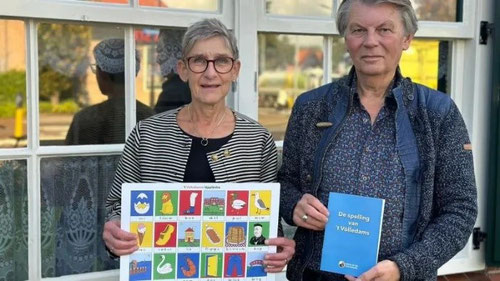
Placemats met woordjes.
De dialectgroep organiseert regelmatig bijeenkomsten die gewijd zijn aan het Volendams. Ook ontwierpen leden placemats met daarop Volendamse woordjes.
Dat slaat aan bij de gewenste doelgroep: de placemats vonden vooral onder jonge ouders gretig aftrek. "We zien dat mensen het weer belangrijk vinden om het dialect te behouden." En zo ziet de Volendamse jeugd bij het ontbijt of avondeten de woorden 'aai' (ei), 'laauw' (leeuw) en 'bien' (been) onder hun bordje staan.
Ik zou het zonde vinden als de taal uitsterft, zeker als ik eraan kan bijdragen om het in leven te houden.
Catharina, voedt haar zoon in Utrecht op in het Fries.
Ook elders in het land zetten mensen zich in om andere talen dan het Nederlands levend te houden, bijvoorbeeld bij het gezin van Catharina. Ze groeide op in een dorpje boven Sneek. Sinds haar studietijd woont ze in Utrecht, inmiddels samen met haar partner en hun 2-jarige zoontje.
Moedertaal meegeven.
Tegen hun zoontje spreekt haar partner Nederlands en Catharina Fries. Het was een bewuste keuze om haar moedertaal mee te geven aan de volgende generatie. "Ik zou het zonde vinden als de taal uitsterft, zeker als ik eraan kan bijdragen om het in leven te houden".
Friestalig opvoeden buiten de provincie is niet vanzelfsprekend. In het dagelijks leven van Catharina spreekt vrijwel iedereen Nederlands. "Je moet soms wel over een drempel heen om dan toch Fries vol te houden".
Toch vindt ze het belangrijk om door te zetten. En het werkt: haar zoon begint te praten in beide talen. "Hij is heel creatief. Als een Fries woord makkelijker is dan het Nederlandse, kiest hij voor het Fries".
Streektalen in Nederland.
Nederland kent twee officiële streektalen: het Nedersaksisch (bijvoorbeeld Twents, Drents of Veluws) en het Limburgs. Beiden werden eind jaren 90 erkend als regionale talen, waardoor het gebruik wordt aangemoedigd en beschermd.
Bij het Fries zit het anders: dat is sinds medio jaren 50 een erkende rijkstaal in Nederland. Friezen kunnen de eigen taal gebruiken bij officiële instanties, zoals in de rechtszaal of bij de gemeente.
Overigens worden in het Caribisch deel van het Nederlandse koninkrijk nog twee officiële talen gebruikt: het Papiaments en het Engels.
Initiatieven van sprekers zijn essentieel om een dialect in stand te houden, zegt onderzoeker Jos Swanenberg van het Meertens Instituut. "Zonder intrinsieke motivatie wordt het niks".
Behalve 'taalwil', zoals Swanenberg het noemt, is ook beleid belangrijk. Sinds de jaren 90 wordt al nagedacht over het behoud van streektalen, in het onderwijs, maar ook in culturele uitingen zoals literatuur en muziek. Zaken als het benoemen van het genre dialectrock tot immaterieel erfgoed hebben een lange aanloop gehad. "Je ziet dat soort verhalen steeds meer aan de oppervlakte komen".
Taalkundige Van Oostendorp zegt dat deze 'dialectrenaissance' in golven komt. "Een eindexamen Fries had je vijftig jaar geleden niet. En nu doet een recordaantal leerlingen het".
Juist doordat dialecten dreigen te verdwijnen, zijn de inspanningen groter om ze te behouden, zegt hij. "Mensen beginnen de waarde in te zien van iets dat dreigt te verdwijnen. Ze houden zielsveel van hun streektaal en alles wat daarbij komt kijken".
Vruchten afwerpen.
Ieder jaar neemt het aantal mensen dat thuis nog dialect spreekt af, zegt universitair hoofddocent Nederlandse Taalkunde Josje Verhagen. "De ouders van nu hebben het niet meegekregen of denken het niet goed genoeg te spreken om het aan kinderen te kunnen leren".
Dat is jammer, zegt ze. "Ik kan me voorstellen dat een dialect een sociale functie heeft en voor binding zorgt." Dat beaamt Catharina. "Het is onderdeel van mijn identiteit", zegt ze. "Ik vind het belangrijk om dat aan mijn zoontje mee te geven".
Hoeveel Nederlanders spreken een streektaal?.
In Limburg spreekt dit jaar naar schatting de helft van de inwoners thuis met elkaar in het Limburgs. In Friesland wordt in zo'n 42 procent van de gevallen thuis in het Fries met elkaar gepraat.
Die percentages liggen lager in provincies waar Nedersaksisch wordt gesproken (Drenthe, Groningen, Overijssel en Gelderland). In Drenthe wordt die regionale taal het meest thuis gebruikt: 28 procent van de mensen doet dat. In Gelderland wordt het minst Nedersaksisch gesproken, in 9 procent van de huishoudens.
https://nos.nl/artikel/2610951-dialecten-in-de-lift-geen-aap-noot-mies-maar-aai-laauw-bien