100% Translated
0% Upvoted
1 Translations, 0 Upvotes, Last Activity 8 months, 2 weeks ago
1 Translations, 0 Upvotes, Last Activity 8 months, 2 weeks ago
1 Translations, 0 Upvotes, Last Activity 8 months, 2 weeks ago
1 Translations, 0 Upvotes, Last Activity 8 months, 2 weeks ago
1 Translations, 0 Upvotes, Last Activity 8 months, 2 weeks ago
1 Translations, 0 Upvotes, Last Activity 8 months, 2 weeks ago
1 Translations, 0 Upvotes, Last Activity 8 months, 2 weeks ago
1 Translations, 0 Upvotes, Last Activity 8 months, 2 weeks ago
1 Translations, 0 Upvotes, Last Activity 8 months, 2 weeks ago
1 Translations, 0 Upvotes, Last Activity 8 months, 2 weeks ago
1 Translations, 0 Upvotes, Last Activity 8 months, 2 weeks ago
1 Translations, 0 Upvotes, Last Activity 8 months, 2 weeks ago
1 Translations, 0 Upvotes, Last Activity 8 months, 2 weeks ago
1 Translations, 0 Upvotes, Last Activity 8 months, 2 weeks ago
1 Translations, 0 Upvotes, Last Activity 8 months, 2 weeks ago
1 Translations, 0 Upvotes, Last Activity 8 months, 2 weeks ago
1 Translations, 0 Upvotes, Last Activity 8 months, 2 weeks ago
1 Translations, 0 Upvotes, Last Activity 8 months, 2 weeks ago
1 Translations, 0 Upvotes, Last Activity 8 months, 2 weeks ago
1 Translations, 0 Upvotes, Last Activity 8 months, 2 weeks ago
1 Translations, 0 Upvotes, Last Activity 8 months, 2 weeks ago
1 Translations, 0 Upvotes, Last Activity 8 months, 2 weeks ago
1 Translations, 0 Upvotes, Last Activity 8 months, 2 weeks ago
1 Translations, 0 Upvotes, Last Activity 8 months, 2 weeks ago
1 Translations, 0 Upvotes, Last Activity 8 months, 2 weeks ago
1 Translations, 0 Upvotes, Last Activity 8 months, 2 weeks ago
1 Translations, 0 Upvotes, Last Activity 8 months, 2 weeks ago
1 Translations, 0 Upvotes, Last Activity 8 months, 2 weeks ago
1 Translations, 0 Upvotes, Last Activity 8 months, 2 weeks ago
1 Translations, 0 Upvotes, Last Activity 8 months, 2 weeks ago
1 Translations, 0 Upvotes, Last Activity 8 months, 2 weeks ago
1 Translations, 0 Upvotes, Last Activity 8 months, 2 weeks ago
1 Translations, 0 Upvotes, Last Activity 8 months, 2 weeks ago
1 Translations, 0 Upvotes, Last Activity 8 months, 2 weeks ago
1 Translations, 0 Upvotes, Last Activity 8 months, 2 weeks ago
1 Translations, 0 Upvotes, Last Activity 8 months, 2 weeks ago
1 Translations, 0 Upvotes, Last Activity 8 months, 1 week ago
1 Translations, 0 Upvotes, Last Activity 8 months, 1 week ago
1 Translations, 0 Upvotes, Last Activity 8 months, 1 week ago
1 Translations, 0 Upvotes, Last Activity 8 months, 1 week ago
1 Translations, 0 Upvotes, Last Activity 8 months, 1 week ago
1 Translations, 0 Upvotes, Last Activity 8 months, 1 week ago
1 Translations, 0 Upvotes, Last Activity 8 months, 1 week ago
1 Translations, 0 Upvotes, Last Activity 8 months, 1 week ago
1 Translations, 0 Upvotes, Last Activity 8 months, 1 week ago
1 Translations, 0 Upvotes, Last Activity 8 months, 1 week ago
1 Translations, 0 Upvotes, Last Activity 8 months, 1 week ago
1 Translations, 0 Upvotes, Last Activity 8 months, 1 week ago
1 Translations, 0 Upvotes, Last Activity 8 months, 1 week ago
1 Translations, 0 Upvotes, Last Activity 8 months, 1 week ago
1 Translations, 0 Upvotes, Last Activity 8 months, 1 week ago
1 Translations, 0 Upvotes, Last Activity 8 months, 1 week ago
1 Translations, 0 Upvotes, Last Activity 8 months, 1 week ago
1 Translations, 0 Upvotes, Last Activity 8 months, 1 week ago
1 Translations, 0 Upvotes, Last Activity 8 months, 2 weeks ago
Bulgarije krijgt de euro, maar niet iedereen is even enthousiast.
Op 1 januari 2026 treedt Bulgarije toe tot de eurozone. Daar is niet iedereen blij mee: iets minder dan de helft van de bevolking is tegen. Ze vrezen onder meer prijsstijgingen. Anderen zien juist kansen. Vier vragen.
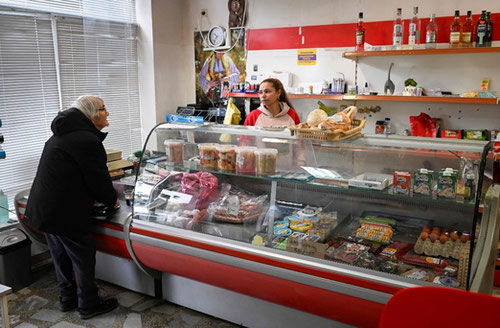
Foto - Deze klant van een levensmiddelenzaak in het Bulgaarse Chuprene kan nog tot en met 31 december met levs betalen, daarna neemt de euro het over. Bron Nikolay Doychinov / AFP.
Dit artikel is geschreven door Arnout le Clercq. Hij is correspondent Centraal- en Oost-Europa van de Volkskrant. Hij woont in Warschau.
Gepubliceerd op 31 december 2025.
Waarom treedt Bulgarije nu toe tot de eurozone?
De munten zijn geslagen, de biljetten gedrukt: op 1 januari verruilt Bulgarije de lev voor de euro. Het 21ste land in de eurozone is dan al negentien jaar lid van de Europese Unie, waarvan lidstaten in principe verplicht zijn de euro in te voeren (Denemarken heeft een uitzondering bedongen). Maar Brussel oefent geen grote druk uit. Roemenië is economisch nog niet klaar voor de euro; in Polen, Hongarije en Tsjechië is er politieke weerstand tegen de munt.
In Bulgarije is het een oude wens, legt Petar Ganev uit, econoom en onderzoeker bij het Bulgaarse Institute for Market Economics. ‘Eind jaren negentig was al duidelijk dat we uiteindelijk naar de eurozone wilden.’
In 1997 werd de lev gekoppeld aan de Duitse mark en later aan de euro. Dit stabiliseerde de wisselkoers nadat het voormalig communistische land had gekampt met hyperinflatie tijdens de transitie naar het kapitalisme.
Maar het werd keer op keer uitgesteld, aanvankelijk omdat Bulgarije economisch achterliep op landen in de eurozone. Nadat in 2009 de eurocrisis was uitgebroken, ging voor Bulgarije ‘de deur dicht’, zegt Ganev. In 2018 dienden de Bulgaren officieel het verzoek in. De hoop bestond dat het land tegelijk met Kroatië (2023) kon toetreden. Maar na het begin van de oorlog in Oekraïne steeg de inflatie. Ook is het sinds 2021 politiek onrustig: Bulgaren gingen sindsdien zeven keer naar de stembus.
Met een enigszins stabiele regering die in januari dit jaar aantrad en teruglopende inflatie, kreeg Bulgarije groen licht van de Europese Commissie. Overigens is de Bulgaarse politiek opnieuw in woelig vaarwater terechtgekomen: eerder deze maand trad de regering af onder druk van grootschalige protesten tegen corruptie en de begroting voor 2026 (de euro speelde geen rol in de demonstraties).
Wat zijn de voordelen?.
De euro moet Bulgarije vooral aantrekkelijker maken voor investeerders, zegt econoom Ganev. De lev was stabiel dankzij de koppeling aan de euro, toch valt de kredietbeoordeling van Bulgarije straks hopelijk hoger uit. Voor investeerders is het een ‘gouden stempel’, aldus Ganev, een garantie voor economische stabiliteit op de lange termijn.
Dit punt maakte ook Christine Lagarde, voorzitter van de Europese Centrale Bank, bij een toespraak in november. ‘We leven in een meer wispelturige wereld, getekend door constante schokken van buiten.’ De euro zal Bulgarije economische, maar ook geopolitieke voordelen opleveren, aldus Lagarde. In een ‘gefragmenteerde wereld’ is het van belang ‘de rijen te sluiten’.
Hoe kijken Bulgaren naar de introductie van de euro?
Het is logisch dat Lagarde de Bulgaren op hun gemak wilde stellen. Er is nogal wat scepsis over de nieuwe munt. In een opiniepeiling afgelopen zomer was 49,2 procent van de ondervraagden voor en 45,8 procent tegen. Een nuance is dat het tegenkamp op zijn beurt bestaat uit mensen die überhaupt geen euro willen en mensen die liever langer wachten met de introductie ervan.
Bulgarije is hierin niet uniek: voordat Letland bijvoorbeeld toetrad tot de euro in 2014, was slechts een kleine meerderheid voorstander. Na de introductie trekt dit doorgaans bij: Europeanen zijn positief over de gemeenschappelijke munt, binnen de eurozone steunt 83 procent van de inwoners de euro.
Politieke partijen zoals grootste partij Gerb en de hervormingsgezinde liberalen van Wij Zetten de Verandering Voort (PP) zijn voor de euro. Maar er is verzet van president Roemen Radev, die een referendum wilde over de kwestie (het parlement wees dit af).
De uiterst rechtse en pro-Russische partij Wedergeboorte organiseerde protesten tegen de euro, die in hun ogen de soevereiniteit van het land aantast. Ook desinformatie, deels van Russische origine en deels van eigen bodem, voedt het wantrouwen. Het Kremlin vreest verdere Europese integratie van Bulgarije, waar het sinds de Koude Oorlog een vinger in de pap heeft.
Ziet het bedrijfsleven voordelen, consumenten maken zich zorgen over prijsstijgingen, vooral Bulgaren die minder te besteden hebben. Het gemiddeld maandloon is ongeveer 1.300 euro. Econoom Ganev verwacht een kleine schok, net als eerder in andere landen. ‘Prijzen worden mogelijk 0,5 tot 0,7 procent hoger, daarna zal het snel stabiliseren.’
Heeft de politieke onrust nog invloed op de introductie van de euro?
Het aftreden van de Bulgaarse regering is geen belemmering voor het invoeren van de euro. Wel kan de politieke onrust invloed hebben op de toekomstige kredietbeoordeling en het (fiscale) beleid, zegt Ganev.
Er liggen nieuwe verkiezingen in het verschiet. ‘Ik vrees dat partijen in de campagnemodus schieten.’ Als extremisten als Wedergeboorte stampij gaan maken over de euro en prijsstijgingen, kunnen middenpartijen zich gedwongen voelen drastische economische maatregelen te nemen, denkt de econoom, ‘zoals prijsplafonds voor bepaalde goederen’.
Eén ding is zeker: de Bulgaarse lev is op 1 januari verleden tijd. De oude munt had overigens een opmerkelijke band met Nederland. Lev is een oud-Bulgaars woord voor leeuw. Zogenoemde ‘leeuwendaalders’ uit de Lage Landen raakten in de 17de eeuw in het zuidoosten van Europa in omloop en leenden hun naam aan de latere munteenheid in verschillende landen. In Roemenië en Moldavië betaalt men nog altijd met de ‘leeuw’: leu in het Roemeens.
https://www.volkskrant.nl/buitenland/bulgarije-krijgt-de-euro-maar-niet-iedereen-is-even-enthousiast~bb9f0683/