100% Translated
19% Upvoted
1 Translations, 1 Upvotes, Last Activity 9 months, 3 weeks ago
1 Translations, 1 Upvotes, Last Activity 9 months, 3 weeks ago
1 Translations, 1 Upvotes, Last Activity 9 months, 3 weeks ago
1 Translations, 1 Upvotes, Last Activity 9 months, 3 weeks ago
1 Translations, 1 Upvotes, Last Activity 9 months, 3 weeks ago
1 Translations, 1 Upvotes, Last Activity 9 months, 3 weeks ago
1 Translations, 1 Upvotes, Last Activity 9 months, 3 weeks ago
1 Translations, 1 Upvotes, Last Activity 9 months, 3 weeks ago
1 Translations, 1 Upvotes, Last Activity 9 months, 3 weeks ago
1 Translations, 1 Upvotes, Last Activity 9 months, 3 weeks ago
1 Translations, 1 Upvotes, Last Activity 9 months, 3 weeks ago
1 Translations, 1 Upvotes, Last Activity 9 months, 3 weeks ago
1 Translations, 1 Upvotes, Last Activity 9 months, 3 weeks ago
1 Translations, 1 Upvotes, Last Activity 9 months, 3 weeks ago
1 Translations, 1 Upvotes, Last Activity 9 months, 3 weeks ago
1 Translations, 1 Upvotes, Last Activity 9 months, 3 weeks ago
1 Translations, 1 Upvotes, Last Activity 9 months, 3 weeks ago
1 Translations, 1 Upvotes, Last Activity 9 months, 3 weeks ago
1 Translations, 1 Upvotes, Last Activity 9 months, 3 weeks ago
1 Translations, 0 Upvotes, Last Activity 9 months, 3 weeks ago
1 Translations, 0 Upvotes, Last Activity 9 months, 3 weeks ago
1 Translations, 1 Upvotes, Last Activity 9 months, 2 weeks ago
1 Translations, 0 Upvotes, Last Activity 9 months, 3 weeks ago
1 Translations, 0 Upvotes, Last Activity 9 months, 3 weeks ago
1 Translations, 0 Upvotes, Last Activity 9 months, 3 weeks ago
1 Translations, 0 Upvotes, Last Activity 9 months, 3 weeks ago
1 Translations, 0 Upvotes, Last Activity 9 months, 3 weeks ago
1 Translations, 0 Upvotes, Last Activity 9 months, 3 weeks ago
1 Translations, 0 Upvotes, Last Activity 9 months, 3 weeks ago
1 Translations, 0 Upvotes, Last Activity 9 months, 3 weeks ago
1 Translations, 0 Upvotes, Last Activity 9 months, 3 weeks ago
1 Translations, 0 Upvotes, Last Activity 9 months, 2 weeks ago
1 Translations, 0 Upvotes, Last Activity 9 months, 2 weeks ago
1 Translations, 0 Upvotes, Last Activity 9 months, 2 weeks ago
1 Translations, 0 Upvotes, Last Activity 9 months, 2 weeks ago
1 Translations, 0 Upvotes, Last Activity 9 months, 2 weeks ago
1 Translations, 0 Upvotes, Last Activity 9 months, 2 weeks ago
1 Translations, 0 Upvotes, Last Activity 9 months, 2 weeks ago
1 Translations, 0 Upvotes, Last Activity 9 months, 2 weeks ago
1 Translations, 0 Upvotes, Last Activity 9 months, 2 weeks ago
1 Translations, 0 Upvotes, Last Activity 9 months, 2 weeks ago
1 Translations, 0 Upvotes, Last Activity 9 months, 2 weeks ago
1 Translations, 0 Upvotes, Last Activity 9 months, 2 weeks ago
1 Translations, 0 Upvotes, Last Activity 9 months, 2 weeks ago
1 Translations, 0 Upvotes, Last Activity 9 months, 2 weeks ago
1 Translations, 0 Upvotes, Last Activity 9 months, 2 weeks ago
1 Translations, 0 Upvotes, Last Activity 9 months, 2 weeks ago
1 Translations, 0 Upvotes, Last Activity 9 months, 2 weeks ago
1 Translations, 0 Upvotes, Last Activity 9 months, 2 weeks ago
1 Translations, 0 Upvotes, Last Activity 9 months, 2 weeks ago
1 Translations, 0 Upvotes, Last Activity 9 months, 2 weeks ago
1 Translations, 0 Upvotes, Last Activity 9 months, 2 weeks ago
1 Translations, 0 Upvotes, Last Activity 9 months, 2 weeks ago
1 Translations, 0 Upvotes, Last Activity 9 months, 2 weeks ago
1 Translations, 0 Upvotes, Last Activity 9 months, 2 weeks ago
1 Translations, 0 Upvotes, Last Activity 9 months, 2 weeks ago
1 Translations, 0 Upvotes, Last Activity 9 months, 2 weeks ago
1 Translations, 0 Upvotes, Last Activity 9 months, 2 weeks ago
1 Translations, 0 Upvotes, Last Activity 9 months, 2 weeks ago
1 Translations, 0 Upvotes, Last Activity 9 months, 2 weeks ago
1 Translations, 0 Upvotes, Last Activity 9 months, 2 weeks ago
1 Translations, 0 Upvotes, Last Activity 9 months, 2 weeks ago
1 Translations, 0 Upvotes, Last Activity 9 months, 2 weeks ago
1 Translations, 0 Upvotes, Last Activity 9 months, 2 weeks ago
1 Translations, 0 Upvotes, Last Activity 9 months, 2 weeks ago
1 Translations, 0 Upvotes, Last Activity 9 months, 2 weeks ago
1 Translations, 0 Upvotes, Last Activity 9 months, 2 weeks ago
1 Translations, 0 Upvotes, Last Activity 9 months, 2 weeks ago
1 Translations, 0 Upvotes, Last Activity 9 months, 2 weeks ago
1 Translations, 0 Upvotes, Last Activity 9 months, 2 weeks ago
1 Translations, 0 Upvotes, Last Activity 9 months, 2 weeks ago
1 Translations, 0 Upvotes, Last Activity 9 months, 2 weeks ago
1 Translations, 0 Upvotes, Last Activity 9 months, 2 weeks ago
1 Translations, 0 Upvotes, Last Activity 9 months, 2 weeks ago
1 Translations, 0 Upvotes, Last Activity 9 months, 2 weeks ago
1 Translations, 0 Upvotes, Last Activity 9 months, 2 weeks ago
1 Translations, 0 Upvotes, Last Activity 9 months, 2 weeks ago
1 Translations, 0 Upvotes, Last Activity 9 months, 2 weeks ago
1 Translations, 0 Upvotes, Last Activity 9 months, 2 weeks ago
1 Translations, 0 Upvotes, Last Activity 9 months, 2 weeks ago
1 Translations, 0 Upvotes, Last Activity 9 months, 2 weeks ago
1 Translations, 1 Upvotes, Last Activity 9 months, 2 weeks ago
1 Translations, 0 Upvotes, Last Activity 9 months, 2 weeks ago
1 Translations, 0 Upvotes, Last Activity 9 months, 2 weeks ago
1 Translations, 0 Upvotes, Last Activity 9 months, 2 weeks ago
1 Translations, 0 Upvotes, Last Activity 9 months, 2 weeks ago
1 Translations, 0 Upvotes, Last Activity 9 months, 2 weeks ago
1 Translations, 0 Upvotes, Last Activity 9 months, 2 weeks ago
1 Translations, 0 Upvotes, Last Activity 9 months, 2 weeks ago
1 Translations, 0 Upvotes, Last Activity 9 months, 2 weeks ago
1 Translations, 0 Upvotes, Last Activity 9 months, 2 weeks ago
1 Translations, 0 Upvotes, Last Activity 9 months, 2 weeks ago
1 Translations, 0 Upvotes, Last Activity 9 months, 2 weeks ago
1 Translations, 0 Upvotes, Last Activity 9 months, 2 weeks ago
1 Translations, 0 Upvotes, Last Activity 9 months, 2 weeks ago
1 Translations, 0 Upvotes, Last Activity 9 months, 2 weeks ago
1 Translations, 0 Upvotes, Last Activity 9 months, 2 weeks ago
1 Translations, 0 Upvotes, Last Activity 9 months, 2 weeks ago
1 Translations, 0 Upvotes, Last Activity 9 months, 2 weeks ago
1 Translations, 0 Upvotes, Last Activity 9 months, 2 weeks ago
1 Translations, 0 Upvotes, Last Activity 9 months, 2 weeks ago
1 Translations, 0 Upvotes, Last Activity 9 months, 2 weeks ago
1 Translations, 0 Upvotes, Last Activity 9 months, 2 weeks ago
1 Translations, 0 Upvotes, Last Activity 9 months, 2 weeks ago
1 Translations, 0 Upvotes, Last Activity 9 months, 1 week ago
1 Translations, 0 Upvotes, Last Activity 9 months, 1 week ago
1 Translations, 0 Upvotes, Last Activity 9 months, 1 week ago
1 Translations, 0 Upvotes, Last Activity 9 months, 1 week ago
1 Translations, 0 Upvotes, Last Activity 9 months, 1 week ago
1 Translations, 0 Upvotes, Last Activity 9 months, 1 week ago
1 Translations, 0 Upvotes, Last Activity 9 months, 1 week ago
1 Translations, 0 Upvotes, Last Activity 9 months, 1 week ago
1 Translations, 0 Upvotes, Last Activity 9 months, 1 week ago
1 Translations, 0 Upvotes, Last Activity 9 months, 1 week ago
Hoe de smetteloze smile langzaam een moetje is geworden (en iets van zijn glans verliest).
Eeuwenlang was de smile niet gebruikelijk in de beeldcultuur en de sociale omgang. In de twintigste eeuw brak de pose door en werd het bovenal een succeskostuum waarmee het ware gemoed verborgen blijft. ‘De smile zegt meer iets over onze samenleving dan over het individu.’
Door Laurens Bluekens, Trouw, 26 november 2025.
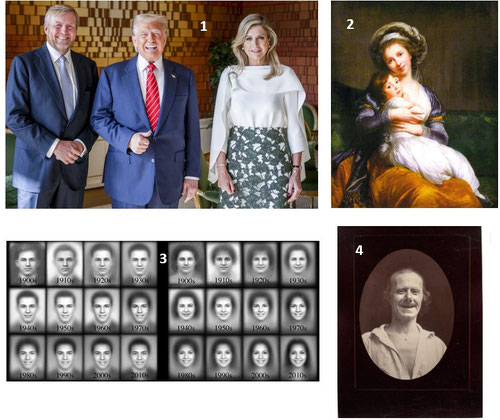
Een fotograaf zet tijdens de afgelopen Navo-top Willem-Alexander, Donald Trump en Máxima op de gevoelige plaat in paleis Huis ten Bosch en telt daarvoor af: “Three, two, one…” De Amerikaanse president lijkt met zijn tong nog snel zijn lippen schoon te vegen en zijn mond daarna in een soort startpositie te zetten. Hij laat zijn kaak zo hangen dat even alleen zijn ondertanden te zien zijn.
Foto 1 - Donald Trump toont zijn smile (standaard mét duimpje) in aanwezigheid van Willem-Alexander en Máxima, in paleis Huis ten Bosch tijdens de laatste Navo-top. Bron Foto Frank van Beek, ANP.
Daarna volgt het kunstje. Trump trekt zijn mondhoeken maximaal omhoog en tovert zijn perfect rechte en parelwitte boventanden tevoorschijn, waarvan niet precies bekend is wat hij eraan heeft laten doen. Ook knijpt de president zijn ogen samen en steekt hij een duimpje op. Máxima lijkt versteend in dezelfde pose, Willem-Alexander staat er wat losser bij. Het contrast tussen Trumps gebruinde huid, blinkende gebit en ouderdomskenmerken maken op zijn zachtst gezegd een gekunstelde indruk.
Het is de smile in zijn zuiverste vorm, de expressie die zo normaal is in onze beeldcultuur en sociale omgang dat we er nauwelijks van opkijken. Zodra er sprake is van een foto of een selfie, is het een ongeschreven regel dat we even onze smile – niet te verwarren met een glimlach, daarover later meer – opplakken.
Het was lange tijd onbetamelijk om uitbundig te glimlachen.
Dat is vrij nieuw. In de privésfeer hebben mensen natuurlijk altijd naar elkaar gelachen en een spontane lach is lastig te onderdrukken. Maar eeuwenlang was het naar de buitenwereld toe ongepast om uitbundig te glimlachen en de tanden te ontbloten. Een open mond werd geassocieerd met de onderklasse en crimineel gedrag. Het kon eigenlijk alleen voorkomen bij verlies van verstand of een overweldigende emotie als angst of extase.
De Britse historicus Colin Jones analyseert in zijn boek The Smile Revolution (2014) de westerse schilderkunst en telde eeuwenlang vrijwel geen enkele glimlach. Koningen en kooplieden lieten zich strak in het gelid portretteren – waardigheid en ernst stonden voorop.
Foto 2 - Élisabeth Vigée-Le Brun; Zelfportret met dochter Julie, 1786. Bron Beeld Imageselect.
Het zelfportret van Élisabeth Vigée-Le Brun uit 1786 brak met die traditie. De Franse schilderes beeldde zichzelf samen met haar dochter glimlachend op het doek af. Niet met een summier lachje zoals op de Mona Lisa of wat schalkser maar met de lippen nog altijd stijf op elkaar, zoals op De lachende cavalier van Frans Hals. Nee, de tanden zijn een stukje ontbloot. Hals vervaardigde wel schilderijen waarop de tanden bloot worden gelachen, maar dat betrof uitsluitend kinderen, zotten en muzikanten uit de lagere klassen, veelal werken die niet in opdracht waren.
Vigée-Le Brun viel niet in die categorie en was geïnspireerd door populaire vernieuwende boeken als Pamela en Clarissa van Samuel Richardson en Julie ou la Nouvelle Héloise van Jean-Jacques Rousseau. In lijn met de sensibiliteit van de verlichtingstijd wilden gegoede Parijzenaren net als de hoofdpersonen hun persoonlijke, natuurlijke gevoelens etaleren. Daarbij hielp het dat de tandheelkunde en de chirurgie in de Franse hoofdstad een sterke ontwikkeling doormaakten. Dat de lippen eerder in de plooi bleven, kwam ook door de slechte gebitten.
Fotografie nam de stijve voorschriften van de schilderkunst over.
Rond de Franse Revolutie volgden meer glimlachende portretten, maar mainstream werd het niet. Zeker voor mannen bleef het een brug te ver om zo vastgelegd te worden. Na de restauratie van de Franse monarchie was het voorbij met de minitrend. Conservatieve waarden keerden terug, de monden gingen weer dicht.
Dat bleef in eerste instantie zo toen de fotografie zich in de negentiende eeuw aandiende. Mensen namen de stijve voorschriften van de schilderkunst over.
Mogelijk speelde ook mee dat vroege fototoestellen zo langzaam waren dat je een geposeerde glimlach ondoenlijk lang moest vasthouden. Velen konden het zich bovendien niet veroorloven om meer dan één keer in hun gehele leven naar de fotograaf te gaan. Dat ging dan op formele manier.
Tegelijkertijd plantten de ideeën van Charles Darwin en Friedrich Nietzsche de zaadjes voor de latere doorbraak van de smile, schrijft de Portugese communicatiewetenschapper Abílio Almeida in A cultural history of laughter (2024). De eerste haalde gezichtsuitdrukkingen uit de morele sfeer door te laten zien dat ze universeel en natuurlijk zijn, de tweede beukte met zijn kritiek op het christendom en tradities in op de morele terughoudendheid rondom lachen.
Om de sociale conventies daadwerkelijk te verleggen, was er meer nodig. Fotografie werd richting twintigste eeuw rap goedkoper en de toestellen hadden minder tijd nodig om een opname te maken. Het medium democratiseerde en de snapshotcultuur kwam op. Lossere fotografie lag in het verschiet, maar het duurde even voordat het grote publiek het aandurfde.
Handig voor als je iets te verkopen hebt.
Hollywoodsterren doorbraken het taboe, te beginnen in de Verenigde Staten. Al voor de Eerste Wereldoorlog circuleerden er plaatjes waarop ze hun tanden bloot lachten. Weer namen vrouwelijke sterren het voortouw. Ook het populaire zelfhulpboek How to win friends and influence people van Dale Carnegie uit 1936 deed een duit in het zakje. Glimlachen werd erin aangeprezen als een van de manieren om ervoor te zorgen dat mensen je aardig vinden. Handig voor als je iets te verkopen hebt.
In de loop van de twintigste eeuw droegen toenemende welvaart en ruimte voor plezier, de emancipatie van de vrouw, televisie en marketing bij aan de verdere normalisering van de smile. Binnen de cosmetische tandheelkunde werd steeds meer mogelijk, vertelt tandarts Pieter van der Geld. “De uitvinding van de kunsthars waarvan composietvullingen zijn gemaakt, zorgde vanaf de jaren zestig voor een grote omwenteling. Met composiet kun je de vorm van tanden op een niet-invasieve manier aanpassen, waardoor de perfecte lach makkelijker te realiseren is. Zeker toen eind jaren tachtig vullingen van amalgaam als gezondheidsrisico werden aangemerkt, explodeerde het gebruik en de ontwikkeling van composiet.”
Rond de jaren negentig kwam het perfecte gebit door bleken, beugels, facings en digital smile design voor veel mensen binnen handbereik te liggen. Internet, sociale media en de selfiecultuur duwden de alomtegenwoordigheid van de smile naar nog grotere hoogten. Botox, lipfillers, ooglidcorrecties en filters op sociale media brachten de volmaaktheid nog een stukje dichterbij.
Foto 3 - Ontwikkeling van de portretfoto’s in jaarboeken van Amerikaanse high schools. Bron Foto Shiry Ginosar.
Met haar analyse van duizenden Amerikaanse jaarboekfoto’s gemaakt tussen 1905 en 2013 illustreert informaticus Shiry Ginosar feilloos de triomftocht van de smile. In elk decennium gingen de monden gemiddeld wat verder open, bij vrouwen wat eerder dan bij mannen.
Een glimlach om aan te geven je onderdanig op te stellen.
Maar de ene glimlach is de andere niet. De smile die zo alomtegenwoordig werd, is niet zomaar een synoniem voor glimlach. Hij heeft een heel specifiek karakter en verdrijft andere vormen van lachen, legt de Amerikaanse sociaal psycholoog Francis T. McAndrew uit. “Bij een smile als die van Trump ontbreekt het aan spontaniteit. Hij staat volledig los van emotie”, zegt hij. “Het is puur en alleen een manier om anderen de indruk te geven dat je succesvol, jong en gezond bent. Dit type lach vertrouwen we niet meer zo sterk, omdat we hem niet zien als een indicator van iemands gemoed.”
Daarnaast gebruiken primaten de smile onder meer als een manier om aan te geven dat ze geen kwaad in de zin hebben, zich onderdanig tegenover de ander opstellen, willen spelen of nerveus zijn. “In veel menselijke interacties zie je dat degene in de minst dominante rol het meeste glimlacht. Denk aan een leerling tegenover een leraar of een sollicitant tegen de interviewer.”
Dat ligt anders bij andere vormen van glimlachen. “Achter een spontane glimlach zitten positieve emoties als blijdschap of tevredenheid. De mondhoeken gaan automatisch omhoog, de tanden ontbloten zich en de spiertjes rondom de ogen trekken samen, waardoor kraaienpootjes ontstaan.” Het was de Franse neuroloog Guillaume Duchenne de Boulogne die dit in de negentiende eeuw vaststelde, vandaar dat deze uitdrukking te boek staat als de Duchenne-lach.
Foto 4 - Een natuurlijke ‘Duchenne-lach’, circa 1856. Maker: Guillaume-Benjamin-Amand Duchenne. Bron Foto Getty.
Een extreem voorbeeld van hoe belangrijk de smile in Hollywood wordt gevonden, biedt de bodyhorrorfilm The Substance (2024). De afgegleden Hollywoodster Elisabeth Sparkle wordt vanwege haar leeftijd zelfs als aerobicsinstructrice voor televisie weggestuurd en begint een mysterieuze substantie te gebruiken die haar lichaam weer jong zou maken. Het spul heeft desastreuze effecten. Als vroege aankondiging daarvan vallen Sparkles perfect (gemaakte?) voortanden uit, waarmee ze heel wat naar de camera aflachte. Weg glimmende façade.
Grote druk op jongeren.
In de 21ste eeuw moeten ook gewone stervelingen zich aan de lopende band op hun best presenteren. De smetteloze smile is een moetje geworden. “Zeker jongeren kunnen door sociale media grote druk voelen om het perfecte gebit te hebben”, zegt tandarts Van der Geld. “Enkele jaren geleden werd er soms veel tandweefsel opgeofferd voor esthetische behandelingen met kronen. Het ergste daarvan ligt inmiddels wel achter ons, maar alsnog moet ik in de praktijk regelmatig radicale wensen van patiënten afwenden.”
Mensen gebruiken het gezicht massaal om zichzelf als individu te tonen, schrijft Merlijn Schoonenboom in zijn boek Het gezicht. Een cultuurgeschiedenis van sluier tot selfie (2023), ‘maar daarvoor wordt het individuele aspect ervan vaak wel erg makkelijk opgegeven.’ De journalist constateert een uniformering van het gezicht, zowel in vorm als in de gezichtsexpressies. ‘Een stroom van gelijkuitziende vrouwen en mannen begint de hedendaagse visuele cultuur te vullen.’
Zeker online ziet Schoonenboom expressies dermate tot eenheidsworst verworden, dat hij spreekt van een digitale hofcultuur. Daarin zijn gezichtsuitdrukkingen vooral een soort aangeleerde, kunstmatige sociale codes, in tegenstelling tot de naar authenticiteit en spontaniteit strevende cultuur waarvoor Vigée-Le Brun stond. Zo lijkt de Trump-smile nog het meest op een succeskostuum dat je naar believen kunt aan- en uittrekken, een masker waarmee het ware gemoed verborgen blijft. Daarmee is de cirkel rond: de smile is net zo’n stram keurslijf geworden als de stijve manier waarop koningen en kooplieden zich voorheen lieten vereeuwigen.
‘Een vrouw die niet lacht wordt snel afgeserveerd als kwaad en zuur’.
Verzet, kritiek en ongemak tegenover de smilecultuur en de kunstmatige perfectie zijn er te over. Er zijn groepen die zich op Instagram zo authentiek mogelijk willen tonen, met alle onvolmaaktheden van dien en vaak met serieuze grimas. Vrouwen verzetten zich luid tegen de door hen gevoelde plicht om altijd maar te moeten glimlachen, zoals recent nog Roos Schlikker in een column in Libelle. ‘Een vrouw die niet lacht wordt snel afgeserveerd als kwaad en zuur’, schreef ze.
Radio-dj Frank van der Lende heeft niets tegen smilen, maar valt met zijn gouden tand wel op. “Zie het als een daad van rebellie”, zegt hij. Het gouden hoesje paste precies om een van zijn voortanden, die van nature net een beetje meer ruimte had. “Veel mensen willen denk ik vooral niet anders zijn, maar ik wijk graag van de norm af. Daarnaast vind ik het ook mooi. Ik ben ontzettend trots op mijn gouden tand en op mijn scheve ondertandjes.”
Ook typerend: journalist Alex Mazereeuw die vorig jaar in de Volkskrant beschreef hoe hij na zijn televisiedebuut toch maar een beugel nam om de scheefgroei van zijn tanden te corrigeren. Het leidde niet helemaal tot het gewenste resultaat: ‘Het vervelende aan het wegnemen van uiterlijke onvolkomenheden is dat je er niet per se een ander mens van wordt.’
Bij het grote publiek is de smile voorlopig nog niet over zijn houdbaarheidsdatum heen, maar hij verliest wel iets van zijn glans. Misschien wordt de smile zo weinig exclusief dat de status ervan serieus afneemt, zegt sociaal psycholoog McAndrew. “De mens voelt het verschil tussen de duchenneglimlach en de Trump-smile haarfijn aan. Als de balans verder doorslaat naar die laatste, wint de spontaniteit aan waardering.”
Smile van een kind doet ons meer dan die van een volwassene.
Volgens communicatiewetenschapper Almeida zit de menselijke kracht juist ook in een bepaalde imperfectie, schrijft hij per mail. ‘Hoe meer de smile gekunsteld is, hoe minder de expressie een oprechte menselijke reactie uitlokt. Het is geen toeval dat de lach van een kind ons meer doet dan die van een volwassene.’
Dat de smile ondanks zijn gekunsteldheid zo populair is, betekent niet dat we in reactie daarop moeten vervallen in een elitaire cultuur waarin alleen het ‘pure’ telt. ‘De werkelijkheid is gemengd. Ook al doorgronden we hem misschien niet helemaal: door zijn alomtegenwoordigheid heeft de smile grote culturele en referentiële waarde. Hij zegt meer iets over onze samenleving dan over het individu. Of we het nu leuk vinden of niet: we passen ons altijd aan, net zoals we ons kleden naar het weer.’
Helaas, sluit Almeida af, neigt de mens vaak naar extremen en zal de trend vroeg of laat omkeren. ‘Laten we het beste maken van de nu heersende sociale conventies. Vandaag is de smile dominant, morgen is het misschien weer de ernst.’
Vigée-Le Brun had in 1786 waarschijnlijk niet gedacht dat haar glimlach weer even ondergronds zou gaan, voordat hij in de twintigste eeuw in alle hevigheid terugkwam. Zo kan ook het kunstje van Trump in paleis Huis ten Bosch over een aantal decennia zomaar te boek staan als een relict uit een lang verloren, overdreven perfectionistische en kunstmatige cultuur van impressiemanagement.
https://www.trouw.nl/verdieping/hoe-de-smetteloze-smile-langzaam-een-moetje-is-geworden-en-iets-van-zijn-glans-verliest~b902013b/