100% Translated
18% Upvoted
1 Translations, 1 Upvotes, Last Activity 10 months ago
1 Translations, 1 Upvotes, Last Activity 10 months ago
1 Translations, 1 Upvotes, Last Activity 10 months ago
1 Translations, 1 Upvotes, Last Activity 10 months, 1 week ago
1 Translations, 1 Upvotes, Last Activity 10 months, 1 week ago
1 Translations, 1 Upvotes, Last Activity 10 months, 1 week ago
1 Translations, 0 Upvotes, Last Activity 10 months, 2 weeks ago
1 Translations, 0 Upvotes, Last Activity 10 months, 2 weeks ago
1 Translations, 0 Upvotes, Last Activity 10 months, 2 weeks ago
1 Translations, 0 Upvotes, Last Activity 10 months, 2 weeks ago
1 Translations, 0 Upvotes, Last Activity 10 months, 2 weeks ago
1 Translations, 0 Upvotes, Last Activity 10 months, 2 weeks ago
1 Translations, 0 Upvotes, Last Activity 10 months, 2 weeks ago
1 Translations, 0 Upvotes, Last Activity 10 months, 2 weeks ago
1 Translations, 0 Upvotes, Last Activity 10 months, 1 week ago
1 Translations, 0 Upvotes, Last Activity 10 months, 1 week ago
1 Translations, 0 Upvotes, Last Activity 10 months, 1 week ago
1 Translations, 0 Upvotes, Last Activity 10 months, 1 week ago
1 Translations, 0 Upvotes, Last Activity 10 months, 1 week ago
1 Translations, 0 Upvotes, Last Activity 10 months, 1 week ago
1 Translations, 0 Upvotes, Last Activity 10 months, 1 week ago
1 Translations, 0 Upvotes, Last Activity 10 months, 1 week ago
1 Translations, 0 Upvotes, Last Activity 10 months, 1 week ago
1 Translations, 0 Upvotes, Last Activity 10 months, 1 week ago
1 Translations, 0 Upvotes, Last Activity 10 months, 1 week ago
2 Translations, 0 Upvotes, Last Activity 10 months, 1 week ago
1 Translations, 0 Upvotes, Last Activity 10 months, 1 week ago
1 Translations, 0 Upvotes, Last Activity 10 months ago
1 Translations, 0 Upvotes, Last Activity 10 months ago
1 Translations, 0 Upvotes, Last Activity 10 months ago
1 Translations, 0 Upvotes, Last Activity 10 months ago
1 Translations, 0 Upvotes, Last Activity 10 months ago
1 Translations, 0 Upvotes, Last Activity 10 months ago
1 Translations, 0 Upvotes, Last Activity 10 months ago
1 Translations, 0 Upvotes, Last Activity 10 months ago
1 Translations, 0 Upvotes, Last Activity 10 months ago
1 Translations, 0 Upvotes, Last Activity 10 months ago
1 Translations, 1 Upvotes, Last Activity 10 months ago
1 Translations, 0 Upvotes, Last Activity 10 months ago
1 Translations, 0 Upvotes, Last Activity 10 months ago
1 Translations, 0 Upvotes, Last Activity 10 months ago
1 Translations, 0 Upvotes, Last Activity 10 months ago
1 Translations, 0 Upvotes, Last Activity 10 months ago
1 Translations, 0 Upvotes, Last Activity 10 months ago
1 Translations, 0 Upvotes, Last Activity 10 months ago
1 Translations, 0 Upvotes, Last Activity 10 months ago
1 Translations, 0 Upvotes, Last Activity 10 months ago
1 Translations, 0 Upvotes, Last Activity 10 months ago
1 Translations, 0 Upvotes, Last Activity 10 months ago
1 Translations, 0 Upvotes, Last Activity 10 months ago
1 Translations, 0 Upvotes, Last Activity 10 months ago
James Watson, een van de ontdekkers van dna-structuur, kreeg de Nobelprijs maar verkocht later zijn medaille.
James Watson (1928-2025), bioloog.
In 1953 publiceerden Watson en collega’s als eersten de structuur van het dna. Die Nobelprijswaardige ontdekking was het hoogtepunt van een leven vol successen en schandalen.
Ellen de Bruin, nrc.nl, 7 november 2025.
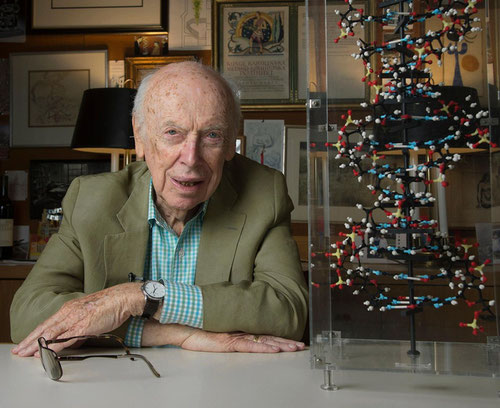
James Watson in 2015. FOTO J. CONRAD WILLIAMS/NEWSDAY RM VIA GETTY IMAGES.
Van het beroemde viertal wetenschappers dat de dubbele-helixstructuur van dna heeft ontdekt is nu ook de laatste persoon overleden: bioloog en Nobelprijslaureaat James Dewey Watson. Volgens The New York Times overleed de wetenschapper in een hospice, waar hij deze week naartoe was gebracht nadat hij in een ziekenhuis aan een infectie was behandeld. Hij werd 97 jaar.
Nadat Watson in 2018 gewond was geraakt toen hij op Long Island met zijn auto van de weg reed en van een zes meter hoge heuvel in een greppel belandde, zou hij al nauwelijks meer aanspreekbaar zijn geweest. Het was het begin van een anticlimactisch einde aan een leven vol successen en zelf veroorzaakte schandalen.
Als kind in Chicago hield James Watson vooral van vogels, hij wilde ornitholoog worden. Maar daar week hij vanaf nadat hij de lezingenbundel What is Life (1944) had gelezen, van natuurkundige (en, beseffen we tegenwoordig, pedofiel) Erwin Schrödinger. Die schreef dat de chromosomen een soort „code-script” moesten bevatten van iemands hele toekomstige ontwikkeling, al was nog niet duidelijk hoe. Het wekte Watsons interesse in genetica. Hij ging zoölogie studeren aan de universiteit van Chicago en promoveerde in 1950 aan de universiteit van Indiana op onderzoek aan virussen in bacteriën. Daarna vertrok hij naar Europa, waar hij de drie Britten van het dubbele-helix-viertal ontmoette – al klinkt ‘viertal’ misschien wat te vrolijk voor hun onderlinge verhoudingen.
Jeugdig arrogant.
Met moleculair bioloog Francis Crick (1916-2004), die geïnspireerd was door hetzelfde boek van Schrödinger, kon Watson het in oktober 1951 wel meteen vinden. Ze waren allebei jeugdig arrogant en konden domheid niet uitstaan, schreef Watson daar later over. Op het Cavendish Lab van de Britse universiteit van Cambridge kregen de twee samen een werkkamer zodat ze anderen niet zouden storen met hun harde gepraat.
In mei 1951 had Watson biofysicus Maurice Wilkins al ontmoet op een symposium in Napels. Wilkins (ook 1916-2004, hij overleed drie maanden na Crick), die aan King’s College in Londen werkte, was bevriend met Crick en probeerde de structuur van dna te ontcijferen met röntgenkristallografie. Daarbij wordt röntgenstraling op moleculen afgevuurd; met wat er terugkaatst op een fotografische plaat kan de positie van atomen in een molecuul uit te puzzelen zijn. De röntgenfoto van dna die Wilkins op het Napelse symposium toonde, was de eerste die Watson ooit zag.
De laatste van het viertal, Rosalind Franklin (1920-1958), was Wilkins’ postdoc, maar die twee konden totaal niet met elkaar overweg. In november 1951 woonde Watson een seminar van Franklin bij waarop ze een röntgenfoto van dna toonde waarin zij toen al een helix-structuur zag.
Na dat seminar presenteerden Watson en Crick hun eerste dna-model, maar ze blunderden zo (als je een dna-molecuul als rits ziet, hadden zij de tandjes aan de buitenkant gedacht op een manier die chemisch heel onwaarschijnlijk is) dat Cavendish-labhoofd Lawrence Bragg hen van het onderwerp afhaalde. Dat kon, want de structuur van dna wás eigenlijk niet hun onderzoeksonderwerp. Maar omdat Braggs aartsrivaal Linus Pauling ook beweerde dat hij de structuur van dna bijna had opgelost, mochten de competitieve Watson en Crick er weer mee verder. Begin 1953 waren ze eruit: op 25 april stond hun artikel Molecular Structure of Nucleic Acids: A Structure for Deoxyribose Nucleic Acid in het wetenschappelijke tijdschrift Nature.
Wilkins en Franklin waren geen co-auteur, maar hun „ongepubliceerde experimentele resultaten en ideeën” worden wel als invloed genoemd. In zijn boek The Double Helix (1968) beschreef Watson hoe dat was gegaan. Hij had ruzie gekregen met Franklin en daarna had Wilkins hem, zonder dat zij dat wist, een röntgenfoto van dna laten zien die zij gemaakt had: de beroemd geworden.
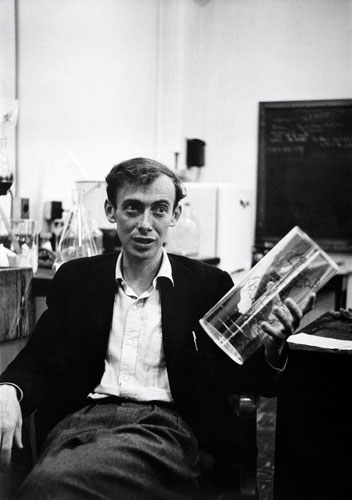
James Watson in 1954. FOTO ANP / SCIENCE PHOTO LIBRARY.
Nobelprijs.
Nog in 2023 werd in Nature bediscussieerd in hoeverre Franklin hierdoor besodemieterd was en hoe cruciaal zijn foto nou eigenlijk was geweest voor Watson en Crick. Misschien waren andere meetgegevens (ook van Franklin, trouwens) belangrijker. Misschien wist ze best dat Watson en Crick haar data hadden. Ze ging in elk geval vriendschappelijk met hen om tot haar overlijden, in 1958, aan eierstokkanker (ze werd slechts 37).
Waarschijnlijk heeft ze nooit geweten dat Watson en Crick hun ontdekking van de dubbele helix aan haar data toeschreven. Ze kon sowieso niet meer delen in de Nobelprijs die Crick, Watson en Wilkins er in 1962 voor kregen, want Nobelprijzen worden niet postuum toegekend (en ook niet aan meer dan drie personen tegelijk). En Franklin heeft zeker nooit kunnen lezen hoe neerbuigend Watson in The Double Helix over haar schreef: daarin was ‘Rosy’ een vrouw die op haar plaats gezet moest worden. Het boek leidde tot commotie; ook Wilkins vond het smakeloos.
Na de publicatie van de dubbele-helixstructuur op zijn 25ste voelde Watson zich enigszins verloren. Hij ging terug naar de VS, werd eerst docent en toen hoogleraar aan Harvard, bleef vogels kijken en trouwde in de maand voor hij veertig werd met de twintig jaar jongere student Elizabeth Lewis. Ze kregen twee zoons, Rufus (1970) en Duncan (1972).
In 1989 werd Watson de eerste directeur van het Human Genome Project; hij hoopte vurig dat het in kaart brengen van al het menselijk dna tot nieuwe behandelingen kon leiden voor bijvoorbeeld de psychoses van zijn oudste zoon. Maar in 1992 vertrok hij er met ruzie (hij vond dat je genen niet moest kunnen patenteren). En tegenwoordig staat op de site van het National Human Genome Research Institute een disclaimer bij Watsons naam, waarin het instituut afstand neemt van zijn „beledigende en wetenschappelijk incorrecte opmerkingen over ras, nationaliteiten, homoseksualiteit, gender en andere maatschappelijke onderwerpen”.
Want Watson liet zich keer op keer onbeschaamd seksistisch en racistisch uit. In 2007 beweerde hij in een interview in The Times dat zwarte mensen minder intelligent zijn dan witte. Hij werd, op zijn 79ste, gedwongen te vertrekken bij Cold Spring Harbor Laboratory (Long Island, VS) dat hij sinds 1968 had geleid.
Omdat hij zich uitgestoten voelde door de wetenschap, liet Watson in 2014 zijn gouden Nobel-medaille veilen. Van de ruim 4 miljoen dollar die dat opleverde schonk hij een deel aan de wetenschap en andere goede doelen (en de medaille kreeg hij terug van de koper). Maar in een documentaire die begin 2019, vlak na zijn auto-ongeluk, uitkwam, herhaalde hij zijn bewering over ras en IQ en voegde hij toe dat het verschil volgens hem genetisch was.
Dit is misschien wel de ironie van Watsons leven: in feite is het dankzij hem dat Rosalind Franklin de geschiedenis is ingegaan als miskend genie en feministisch icoon, terwijl hij natuurlijk wel de excentrieke Nobelprijswinnaar is, maar tevens herinnerd zal worden als archaïsche, kleingeestige hork.
https://www.nrc.nl/nieuws/2025/11/07/james-watson-een-van-de-ontdekkers-van-dna-structuur-won-de-nobelprijs-maar-verkocht-later-zijn-medaille-a4912153