100% Translated
14% Upvoted
1 Translations, 1 Upvotes, Last Activity 1 year, 1 month ago
1 Translations, 1 Upvotes, Last Activity 1 year, 1 month ago
1 Translations, 1 Upvotes, Last Activity 1 year, 1 month ago
1 Translations, 1 Upvotes, Last Activity 1 year, 1 month ago
1 Translations, 1 Upvotes, Last Activity 1 year, 1 month ago
1 Translations, 1 Upvotes, Last Activity 1 year, 1 month ago
1 Translations, 1 Upvotes, Last Activity 1 year, 1 month ago
1 Translations, 0 Upvotes, Last Activity 1 year, 1 month ago
1 Translations, 1 Upvotes, Last Activity 1 year, 1 month ago
1 Translations, 1 Upvotes, Last Activity 1 year, 1 month ago
1 Translations, 1 Upvotes, Last Activity 1 year, 1 month ago
1 Translations, 0 Upvotes, Last Activity 1 year, 1 month ago
1 Translations, 0 Upvotes, Last Activity 1 year, 1 month ago
1 Translations, 0 Upvotes, Last Activity 1 year, 1 month ago
1 Translations, 0 Upvotes, Last Activity 1 year, 1 month ago
1 Translations, 0 Upvotes, Last Activity 1 year, 1 month ago
1 Translations, 0 Upvotes, Last Activity 1 year, 1 month ago
1 Translations, 0 Upvotes, Last Activity 1 year, 1 month ago
1 Translations, 0 Upvotes, Last Activity 1 year, 1 month ago
1 Translations, 0 Upvotes, Last Activity 1 year, 1 month ago
1 Translations, 0 Upvotes, Last Activity 1 year, 1 month ago
1 Translations, 0 Upvotes, Last Activity 1 year, 1 month ago
1 Translations, 0 Upvotes, Last Activity 1 year, 1 month ago
1 Translations, 0 Upvotes, Last Activity 1 year, 1 month ago
1 Translations, 0 Upvotes, Last Activity 1 year, 1 month ago
1 Translations, 0 Upvotes, Last Activity 1 year, 1 month ago
1 Translations, 0 Upvotes, Last Activity 1 year, 1 month ago
1 Translations, 0 Upvotes, Last Activity 1 year, 1 month ago
1 Translations, 0 Upvotes, Last Activity 1 year, 1 month ago
1 Translations, 0 Upvotes, Last Activity 1 year, 1 month ago
1 Translations, 0 Upvotes, Last Activity 1 year, 1 month ago
1 Translations, 0 Upvotes, Last Activity 1 year, 1 month ago
1 Translations, 0 Upvotes, Last Activity 1 year, 1 month ago
1 Translations, 0 Upvotes, Last Activity 1 year, 1 month ago
1 Translations, 0 Upvotes, Last Activity 1 year, 1 month ago
1 Translations, 0 Upvotes, Last Activity 1 year, 1 month ago
1 Translations, 0 Upvotes, Last Activity 1 year, 1 month ago
1 Translations, 0 Upvotes, Last Activity 1 year, 1 month ago
1 Translations, 0 Upvotes, Last Activity 1 year, 1 month ago
1 Translations, 0 Upvotes, Last Activity 1 year, 1 month ago
1 Translations, 0 Upvotes, Last Activity 1 year, 1 month ago
1 Translations, 0 Upvotes, Last Activity 1 year, 1 month ago
1 Translations, 0 Upvotes, Last Activity 1 year, 1 month ago
1 Translations, 0 Upvotes, Last Activity 1 year, 1 month ago
1 Translations, 0 Upvotes, Last Activity 1 year, 1 month ago
1 Translations, 0 Upvotes, Last Activity 1 year, 1 month ago
1 Translations, 0 Upvotes, Last Activity 1 year, 1 month ago
1 Translations, 0 Upvotes, Last Activity 1 year, 1 month ago
1 Translations, 0 Upvotes, Last Activity 1 year, 1 month ago
1 Translations, 0 Upvotes, Last Activity 1 year, 1 month ago
1 Translations, 0 Upvotes, Last Activity 1 year, 1 month ago
1 Translations, 0 Upvotes, Last Activity 1 year, 1 month ago
1 Translations, 0 Upvotes, Last Activity 1 year, 1 month ago
1 Translations, 0 Upvotes, Last Activity 1 year, 1 month ago
1 Translations, 0 Upvotes, Last Activity 1 year, 1 month ago
1 Translations, 0 Upvotes, Last Activity 1 year, 1 month ago
1 Translations, 0 Upvotes, Last Activity 1 year, 1 month ago
1 Translations, 0 Upvotes, Last Activity 1 year, 1 month ago
1 Translations, 0 Upvotes, Last Activity 1 year, 1 month ago
1 Translations, 0 Upvotes, Last Activity 1 year, 1 month ago
1 Translations, 0 Upvotes, Last Activity 1 year, 1 month ago
1 Translations, 0 Upvotes, Last Activity 1 year, 1 month ago
1 Translations, 0 Upvotes, Last Activity 1 year, 1 month ago
1 Translations, 0 Upvotes, Last Activity 1 year, 1 month ago
1 Translations, 0 Upvotes, Last Activity 1 year, 1 month ago
1 Translations, 0 Upvotes, Last Activity 1 year, 1 month ago
1 Translations, 0 Upvotes, Last Activity 1 year, 1 month ago
1 Translations, 0 Upvotes, Last Activity 1 year, 1 month ago
1 Translations, 0 Upvotes, Last Activity 1 year, 1 month ago
1 Translations, 0 Upvotes, Last Activity 1 year, 1 month ago
1 Translations, 0 Upvotes, Last Activity 1 year, 1 month ago
1 Translations, 0 Upvotes, Last Activity 1 year, 1 month ago
1 Translations, 0 Upvotes, Last Activity 1 year, 1 month ago
1 Translations, 0 Upvotes, Last Activity 1 year, 1 month ago
1 Translations, 0 Upvotes, Last Activity 1 year, 1 month ago
1 Translations, 0 Upvotes, Last Activity 1 year, 1 month ago
1 Translations, 0 Upvotes, Last Activity 1 year, 1 month ago
1 Translations, 0 Upvotes, Last Activity 1 year, 1 month ago
1 Translations, 0 Upvotes, Last Activity 1 year, 1 month ago
1 Translations, 0 Upvotes, Last Activity 1 year, 1 month ago
1 Translations, 0 Upvotes, Last Activity 1 year, 1 month ago
1 Translations, 0 Upvotes, Last Activity 1 year, 1 month ago
1 Translations, 0 Upvotes, Last Activity 1 year, 1 month ago
1 Translations, 0 Upvotes, Last Activity 1 year, 1 month ago
1 Translations, 0 Upvotes, Last Activity 1 year, 1 month ago
INTERVIEW - WILLEMIJN WAAL.
Is het Griekse alfabet ouder dan iedereen tot nu dacht? ‘Griekenland was niet uitzonderlijk’.
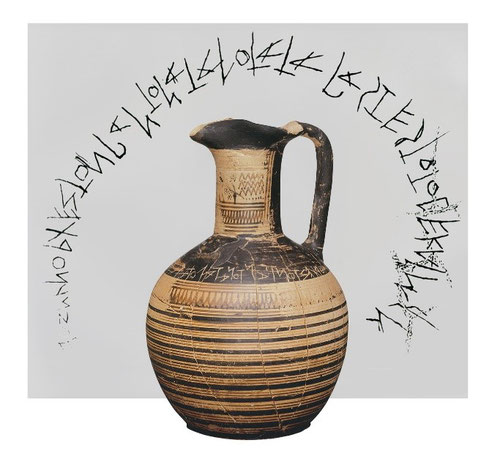
Afbeelding - Een vaas uit de 8ste eeuw voor Christus met een van de oudst bekende teksten in het Griekse alfabet. Volgens de tekst zal de vaas worden uitgereikt aan de mooiste danser - Bron National Archaeological Museum Athens.
Leefde Homerus eerder dan gedacht? Het Griekse alfabet stamt uit de 8ste eeuw voor Christus, is de heersende theorie. Volgens Willemijn Waal kan dat niet kloppen: het moet (veel) ouder zijn. Dat gaat de classicus de komende tijd bewijzen.
Door Mieke Zijlmans, De Volkskrant, 25 juli 2025.
Bij de klassieke Griekse inscripties die u tijdens uw vakantiereis kunt aantreffen in Europese musea, staan doorgaans data beginnend ná 800 voor Christus. De tijd van Homerus’ Ilias en Odyssee. De inscripties op archeologische vondsten in de vitrines van musea, en natuurlijk Homerus’ boeken, zouden de alleroudste teksten zijn die werden geschreven in de letters van het Griekse alfabet. Dat was in de 8ste eeuw nét bedacht, is de gangbare theorie.
Maar zijn die teksten inderdaad de oudste in het Grieks? Wel volgens een nogal roekeloze conclusie uit de jaren dertig van de vorige eeuw. Het Griekse alfabet zou zijn ontstaan tussen ongeveer 750 en 700 voor Christus. Daarna gingen de Grieken razendsnel dichten, inscripties aanbrengen op aardewerk en schreef Homerus zijn meesterwerken. Er is geen Grieks schrift overgeleverd dat ouder is dan de gevonden teksten, dus ziedaar: dat wat wij kennen, is het oudste Griekse schrift. Staat ook in vrijwel alle vakliteratuur, encyclopedieën, leerboeken en op websites.
Willemijn Waal gelooft daar niks van. Waal is classicus, universitair hoofddocent Oude Nabije Oostenstudies aan de Universiteit Leiden en specialist op het gebied van oude talen uit het Nabije Oosten. Wat Waal betreft, kan de heersende theorie in de shredder. Het Griekse alfabet moet veel eerder zijn ontstaan dan in die 8ste eeuw. Waal heeft van de Nederlandse Organisatie voor Wetenschappelijk Onderzoek (NWO) een Vici-beurs gekregen van 1,5 miljoen euro voor onderzoek om haar standpunt te onderbouwen: ‘Het Griekse alfabet is minimaal een eeuw ouder, mogelijk dateert het zelfs uit de 11de eeuw voor Christus. Of het is nóg ouder.’
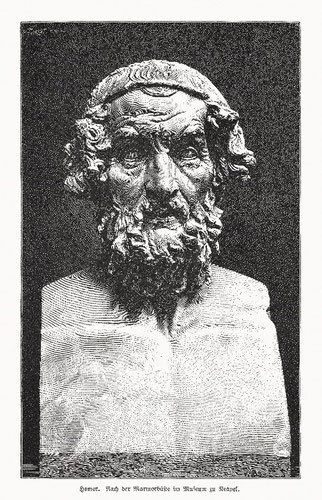
Afbeelding - Homerus - Bron Getty.
Wat zegt de theorie die u aanvalt zoal?
‘Volgens die theorie namen de Grieken in de 8ste eeuw het alfabet over van de Feniciërs na een zogenoemde dark age, een periode van verval van vier eeuwen waarin er geen schrift was. Vervolgens brachten ze enkele vernieuwingen aan. Het Fenicische alfabet kende geen klinkertekens, die zetten de Grieken erin. Daarop volgde in vijftig jaar, tussen 750 en 700 voor Christus, een explosie van teksten, een big bang van inscripties. Poëzie. Schunnige graffiti op rotsen, van het type ‘Ik heb hier dat en dat meisje gepakt’. En ook het werk van Homerus.
‘Dat is misschien wel een romantisch idee – maar het klopt niet. We begrijpen inmiddels dat die dark age geen periode van stilstand en verval was, er gebeurde van alles. Daarnaast is de stellingname dat alle alfabetten met klinkertekens afstammen van het Griekse. Het is zeer de vraag of de Grieken die tekens wel echt als eerste hebben bedacht. De oudere medeklinkeralfabetten kenden wel degelijk klinkertekens, al gebruikten ze die niet stelselmatig.
‘Het is niet waarschijnlijk dat de oudst overgeleverde Griekse teksten het allereerste gebruik zijn van dit schrift. Dit moet eerder een uitbreiding zijn van een eerder schrift. Pas later, als het verankerd is in de samenleving, ga je het ook gebruiken voor speelse graffiti, of om je vaasje op te leuken.’
Wat schreven die oudere Grieken dan zoal?.
‘De eerste, niet bewaard gebleven geschriften zullen vooral saaie administratieve en boekhoudkundige teksten zijn geweest. Zoals je die ziet in spijkerschrift: contractjes over de levering van graan en een paar schaapjes. En brieven.
‘Het grote verschil tussen het Griekse alfabet en spijkerschrift is dat spijkerschrift werd geschreven op klei. Die hardde uit of werd gebakken en is daardoor bewaard gebleven. Terwijl het Grieks vermoedelijk werd geschreven op papyrus, perkament, palmbladeren, berkenbast. Materialen die in het Griekse klimaat hooguit een paar honderd jaar overleven, maar geen duizenden. Dat er geen Griekse teksten zijn overgeleverd uit de dark age, betekent niet dat ze er nooit zijn geweest.
‘In 1952 is het lineair B ontcijferd, het schrift dat werd gebruikt op Kreta en op het Griekse vasteland van ongeveer 1400 tot 1200 voor Christus. De taal ervan bleek Myceens, een vroege vorm van Grieks. De Grieken schreven dus al minstens zevenhonderd jaar eerder: dan is het onlogisch dat ze vervolgens vierhonderd jaar lang niks opschrijven, waarna opeens een explosie van schriften volgt. Alsof ze op een ochtend wakker werden, een alfabet bedachten en gedichten en graffiti begonnen te schrijven. Dat lineair B Grieks was, wisten ze in de jaren dertig nog niet. Dat is een belangrijke ontdekking geweest, waarvan de implicaties wel wat meer doordacht hadden mogen worden.’
Wat is de betekenis van uw stellingname voor ons allen?
‘Dit alfabet wordt nog steeds gebruikt en het is het meestgebruikte schrift ter wereld. We kunnen de geschiedenis ervan bijna vierduizend jaar volgen. En het Griekse alfabet is een belangrijke schakel in de puzzel van alfabetten.’
Het Romeinse alfabet, dat wij gebruiken, is een afgeleide van het Griekse, toch?.
‘Ik wil dat nuanceren. In het model dat ik aanval, is het Griekse alfabet de ‘moeder’ van alle alfabetten met klinkertekens. Volgens die theorie hebben ze dat alfabet in de 8ste eeuw razendsnel doorgegeven aan Italië, Anatolië en het Iberisch schiereiland. Ik denk dat deze alfabetten niet ná elkaar, maar naast elkaar zijn ontstaan, dus als ‘zusjes’, en zich in geleidelijk tempo ontwikkelden.’
Waarom is uw theorie volgens uw collega’s in binnen- en buitenland controversieel?.
‘Dat heeft deels te maken met de reputatie die het oude Griekenland heeft. De Grieken zouden de belangrijkste spelers in de regio zijn geweest, wegbereiders op het gebied van beschaving. Aan het bedenken van het alfabet werden lang allerlei consequenties verbonden, zoals dat deze uitvinding een democratie mogelijk maakte.
‘Dat is Helleno-centrisch gedacht. Griekenland was niet uitzonderlijk. Het stond sterk in verbinding met de ‘Levant’: de regio in het oostelijke Middellandse Zeegebied, ruwweg gelegen tussen Turkije, Egypte en Mesopotamië. Een gebied met sterke culturen, waaruit veel schriften zijn overgeleverd. De vroegste voorlopers van het alfabet dateren van 1900 voor Christus, uit Egypte. Griekenland vormde geen culturele uitzondering.’
Uw theorie over de datering van het vroegste Grieks moet de vele liefhebbers van Homerus voor het hoofd stoten?.
‘In het huidige model kan Homerus niet eerder geleefd hebben dan in de 8ste eeuw. Homerus heeft verhalen opgeschreven die voordien mondeling waren overgeleverd. Maar als je de specifieke kenmerken van het werk van Homerus vergelijkt met die van de puur orale traditie, zoals die in Afrika, dan blijkt dat de échte orale traditie anders werkt, losser is. Misschien is het werk van Homerus eerder een combinatie van een orale en een schriftelijke traditie.
‘Opvallend in boek 2 van de Ilias is bijvoorbeeld een opsomming van de vele schepen die naar Troje trekken vanuit ruim 170 Griekse steden die we kennen uit de late bronstijd. Homerus beschrijft de latebronstijdwereld, tot 1200 voor Christus. In de 8ste eeuw, in de ijzertijd, bestonden die steden deels niet meer. Dat zo’n lijst van stedennamen eeuwenlang nauwkeurig mondeling is overgeleverd, is niet vanzelfsprekend – laat ik het zo formuleren.
‘Misschien leefde Homerus dus eerder. Of misschien maakte hij gebruik van een lijst die al eerder was opgetekend: van een schriftelijke bron dus. Het lijkt me goed die mogelijkheid open te laten. Het is sowieso natuurlijk de vraag of Homerus wel heeft bestaan. In elk geval zijn al langer bestaande verhalen door minimaal één schrijver opgeschreven.
Hoe wilt u uw theorie gaan onderbouwen?.
‘Zoals gezegd is er behoorlijk veel bewijs – zowel direct als indirect – voor het gegeven dat het Griekse alfabet ouder moet zijn dan de 8ste eeuw voor Christus. Dat bewijs is de afgelopen decennia alleen maar gegroeid. Het probleem is dat de bestudering van de vroege alfabetten nogal versnipperd is over regio’s en over vakgebieden: archeologie, klassieke talen, de bestudering van inscripties. Je ziet dat nieuwe ontdekkingen en inzichten in het ene veld niet doordringen tot andere vakgebieden. Het is mijn streven om al het beschikbare bewijs samen te brengen en in kaart te brengen hoe de vroegste geschiedenis van het alfabet echt is verlopen.
‘Verder kijk ik naar de nieuwste onderzoeksresultaten op het gebied van koolstofdateringen: een methode die bepaalt hoeveel C14 er in organisch materiaal zit. Hoe minder C14, des te ouder het materiaal. Kijk: van oudsher wordt aardewerk gedateerd aan de hand van de gebruikte ‘stijl’. Zo wordt de ‘geometrische’ periode, waaruit we het eerste aardewerk met inscripties kennen, geplaatst in de 8ste eeuw. Maar er komen steeds meer C14-dateringen die uitwijzen dat dat geometrische aardewerk niet uit de 8ste eeuw komt, maar uit de 9de, of misschien zelfs uit de 10de eeuw voor Christus. Dat past heel mooi bij mijn verhaal. Want als die inscripties ouder zijn, bestaat het Griekse alfabet ook al veel langer.’
https://www.volkskrant.nl/wetenschap/is-het-griekse-alfabet-ouder-dan-iedereen-tot-nu-dacht-griekenland-was-niet-uitzonderlijk~b0070e0c/